


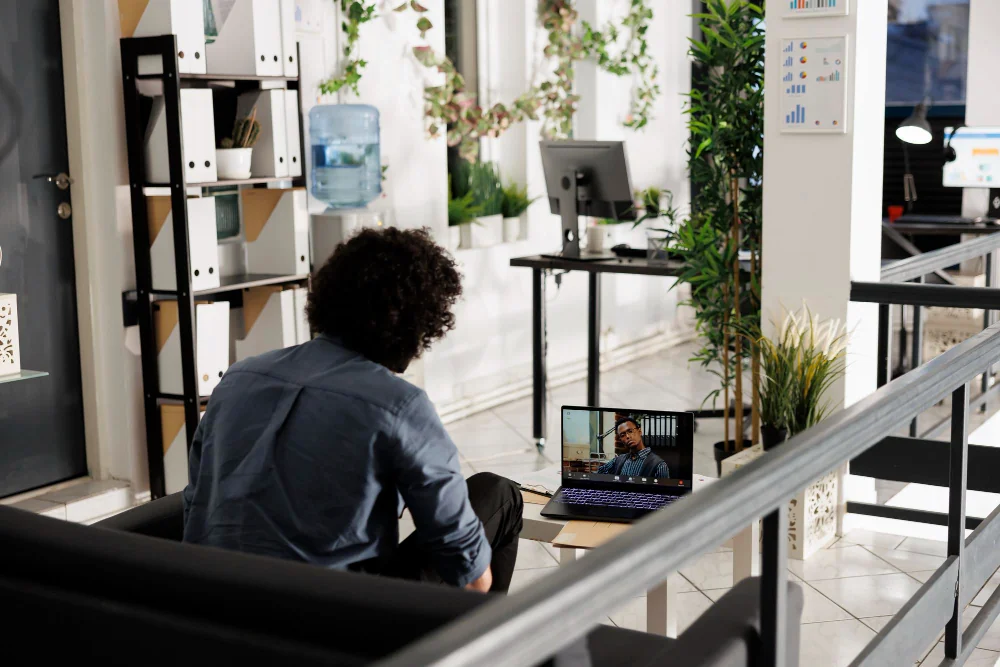
It's Tuesday morning and your office is bursting at the seams. Colleagues search in vain for a free desk, meeting rooms are booked solid and the coffee machine is working overtime. Three days later, on Friday, that same office echoes with silence. This phenomenon — known as the "camel curve" in office occupancy — is now the reality for 70% of all hybrid offices. So the challenge for businesses is this: how do you manage this uneven distribution without disrupting the natural dynamics of collaboration?
Understanding the camel curve: rational behaviour, not chaos
The camel curve is characterised by occupancy peaks on Tuesday and Wednesday, while Monday and Friday remain relatively quiet. These midweek peaks are often 20 to 30% higher than occupancy on quieter days. While average daily office occupancy hovers around 44%, it can climb to as much as 70% at peak times, while quiet days see occupancy of just 25%.
This pattern doesn't arise from weak management or a lack of policy. Teams deliberately choose Tuesday and Wednesday because these days offer the most overlap for decision-making and collaboration. It's a rational choice, driven by the need to keep projects moving and collaborate effectively. The number of meetings held midweek is, on average, 40% higher than on other days, with around 40 meetings a month concentrated on these two days.
From gut feeling to data-driven insight
Many organisations still rely on instinct when estimating office occupancy. "It feels busy" or "there are plenty of spaces" are common refrains, but this approach often leads to poorer decisions. Modern sensors and booking systems provide direct insight into desk usage, no-shows and team preferences.
Tools such as GoBright, Officebooking and Tango Space provide dashboards that show exactly when spaces sit empty, and why. This data often reveals surprising patterns: around 30 to 35% of booked meeting rooms go unused, particularly on busy Tuesday and Wednesday afternoons. Automatically releasing reserved spaces after a no-show can tackle this waste directly.
Smart spreading without losing collaboration
It's tempting to simply require teams to come into the office on different days, but forced spreading can actually put collaboration under strain. The key lies in understanding why teams come together in the first place. Analysing collaboration patterns reveals who needs to work with whom, and for what purpose.
Successful companies communicate clearly about the purpose of office days for each team: is it about innovation sessions, meetings or team building? That clarity shapes behaviour far more effectively than imposed rules. Research shows that organisations with clear team goals can develop as many as four different weekly patterns, with teams coming together on different days without any loss of productivity.
Nudging and positive incentives
Rather than compulsion, positive incentives often work better. Companies that offer the best meeting rooms, catering or networking events on Monday, Thursday or Friday see a more natural spread emerge. This subtle approach respects team autonomy and encourages the desired behaviour without imposing obligations.
Flexible space layouts as the answer
The traditional office model, with fixed desks and large meeting rooms, doesn't sit well with the camel curve. Modern offices call for flexible zones for focus, collaboration and informal meetings. Shared workspaces and modular furniture make it possible to adapt the space to each day's occupancy.
Serviced offices are leading the way here. On average, they save 6 to 9 square metres per person compared with traditional offices, by making smart use of shared facilities. For a 500 square metre office, better use of space can deliver direct savings of 2,500 to 7,500 euros a year, excluding energy costs.
The financial impact of smart planning
A data-driven workplace strategy delivers measurable savings. On average, companies can save 5 to 15% on office costs by spreading teams more efficiently. For an organisation with 200 employees, that could amount to an annual saving of 1.9 million euros when hybrid working is optimally organised.
According to CBRE, demand for office space in the G5 cities is set to fall by 8.7% by 2030, while the average space per employee shrinks from 16.5 to 14.3 square metres. This makes smart planning even more important: less space needs to be used more effectively.
Implementation: from measurement to optimisation
A successful approach starts with measuring and visualising the current pattern. Sensors and booking systems cost around 3 to 8 euros per employee per month — an investment that can quickly pay for itself. After the initial data collection, the next step is analysing team interactions and setting clear goals per department.
Ongoing monitoring is essential. Weekly measurements of occupancy trends, insight into collaboration and employee satisfaction show the impact of any measures taken. This continuous feedback makes it possible to adjust quickly if an approach isn't delivering the desired effect.
Privacy and buy-in
When using sensors and recording data, privacy must be carefully safeguarded. Clear communication about what is being measured and why, along with clear employee consent, is essential for buy-in. Some teams may decline monitoring; in that case, anonymous counts or voluntary check-ins offer an alternative.
The future of office planning
The camel curve isn't a temporary phenomenon but a structural consequence of hybrid working. In the Netherlands, 61% of the working population wants to work hybrid, while only 19 to 20% actually work from home regularly. There's still a gap between aspiration and practice, which creates opportunities for organisations bold enough to rethink their workplace strategy.
Smaller companies with fewer than 30 employees may not be able to justify investment in extensive systems. For them, simpler solutions — such as manual headcounts or basic booking systems — are often enough to gain insight and make improvements.
Managing the camel curve requires a balance between efficiency and human needs. Companies that combine data with an understanding of their people, flexibility with structure, and technology with team dynamics, create workplaces that are both cost-effective and inspiring. The secret isn't eliminating the pattern, but understanding and optimising it. Teams don't choose busy Tuesdays and Wednesdays without reason — they're seeking the energy and dynamism that comes from colleagues coming together. Smart planning respects that natural rhythm while limiting its downsides.


 info@deskfinder.nl