

The way we work has changed dramatically in recent years. Where offices used to be places everyone came together every day, they have now become dynamic meeting hubs. This shift has direct implications for how companies design their workspace, how many square metres they need, and which amenities are essential for a productive working environment.
From fixed desks to flexible work zones
Average office occupancy in the Netherlands fell from 65% before the pandemic to around 59% in 2025. This isn't a temporary phenomenon, but a structural change in the way we organise work. Employees now work an average of two to three days a week in the office, making the traditional approach of one desk per person outdated.
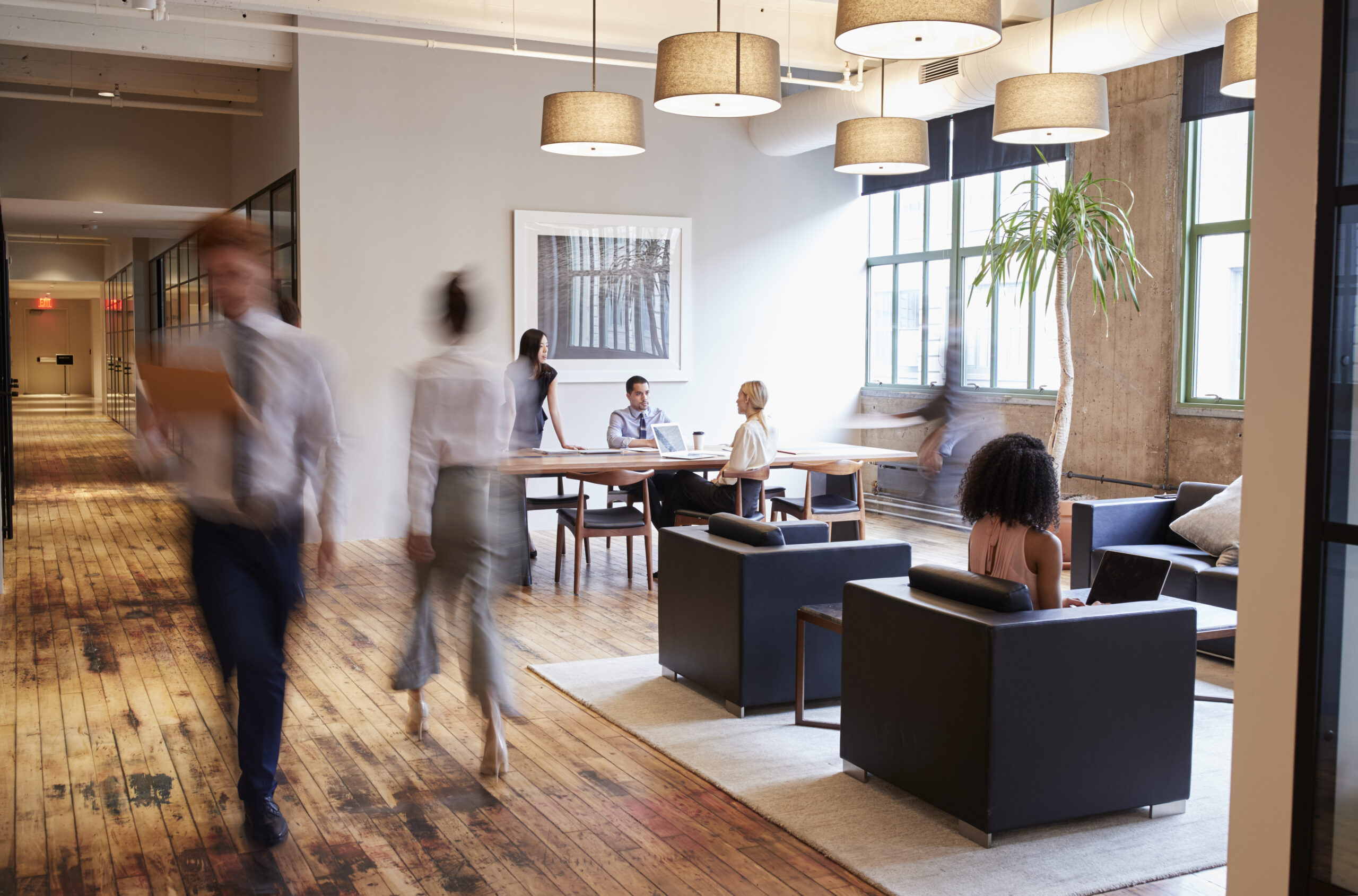
This new reality calls for a fundamental redesign of office space. Companies are switching en masse to activity-based working, where employees choose a workspace suited to the task at hand. There are quiet zones for focused work, brainstorming sessions take place in open areas, and informal conversations happen in lounge corners. This model no longer calls for fixed desks, but for a well-considered mix of different types of workspace.
The shift towards flexible zones brings practical benefits. Organisations can use their space more efficiently by sharing desks and creating multifunctional spaces. A meeting room becomes a training venue after hours; the lunch area turns into a presentation space. This flexibility maximises the use of available square metres.
The camel effect: peaks and troughs in occupancy
A striking pattern is emerging in modern offices: Tuesday and Thursday are the busiest days, with 70% occupancy, while Monday, Wednesday and Friday see occupancy of just 35 to 50%. This so-called camel pattern presents companies with a dilemma. Should they design their space around peak days, risking empty offices on quieter days, or accept that employees sometimes won't have a desk?
Smart organisations are tackling this challenge with desk-booking systems. Employees reserve their workspace in advance, giving managers direct insight into occupancy patterns. This data helps optimise the layout of the space and prevents frustration over desk availability. Some companies are even experimenting with variable pricing or incentives to spread occupancy more evenly across the week.
A layout that invites collaboration
The modern office has become primarily a place for meeting and collaboration. This shift in function calls for a different layout than the traditional office with rows of desks. Companies are investing in interiors with plenty of greenery, natural light and wooden accents to promote wellbeing. Acoustic panels and quiet rooms provide comfort in open-plan offices, where noise can quickly become a problem.
Ergonomic furniture is no longer a luxury, but a necessity. Height-adjustable desks, quality chairs and variation in working posture support the health of employees who make a conscious choice to come into the office. These investments pay off in higher employee satisfaction and more office days per person. Research shows that an attractively designed office motivates employees to come in more often, which strengthens company culture and team dynamics.
Multifunctional spaces are the new standard. A room that serves as a meeting room in the morning becomes a workshop venue in the afternoon and ends the day as a space for drinks. This flexibility calls for furniture that can be moved quickly, modular wall systems, and technology that supports different layouts.
Location as a strategic choice
Choosing an office location goes beyond property costs alone. Locations in city centres typically cost between 250 and 350 euros per square metre per year, compared with 80 to 120 euros on business parks, but they offer important benefits. Good public transport links reduce travel time for employees, which is especially important with hybrid working. A central location also helps attract talent and strengthens an organisation's professional image.
The Dutch office market shows a growing divide between sustainable offices in prime locations and outdated buildings in less attractive spots. Companies are consolidating into prime locations with at least an energy label A, good public transport connections and modern amenities. This trend is set to continue as sustainability, and accountability for it, becomes more important to stakeholders.
Fixed lease or flexible contract: a strategic trade-off
The choice between traditional leases and flexible office solutions has become more complex. A fixed office for 20 employees costs around 32,000 euros a year in rent, plus an upfront investment of 50,000 to 100,000 euros for fit-out. Serviced offices cost considerably more, at 600 euros per desk per month, but offer important advantages for growing companies.
Flexible offices require no starting capital, save on the cost of an office manager (45,000 to 58,000 euros a year), and offer contracts with notice periods of just one to three months. For companies with up to 20 employees, or organisations with uncertain growth prospects, this model often proves more cost-effective. The shift from capital expenditure to operating costs also improves cash flow.
Long-term contracts offer discounts of 10 to 15%, but tie companies in for years. In a time of rapid change, contract flexibility often outweighs pure cost savings. The tipping point between long and short contracts lies at around three years — a period in which a lot can change in company size and ways of working.
Practical tips for modern office design
Successful office design in the hybrid era calls for a well-considered approach. Start with a thorough analysis of actual occupancy data over several months. Look not just at averages, but also at patterns by team, role and day of the week. These insights form the basis for an effective layout of the space.
Introduce desk-booking systems from day one. These systems not only provide insight into usage patterns, but also help manage expectations and prevent conflicts over desks. The data from these systems enables ongoing optimisation.
Invest in zones with different energy levels. Create quiet focus zones for deep work, lively collaboration spaces for teamwork, and informal meeting spots for spontaneous interaction. Make sure employees intuitively understand which space is meant for which activity, through consistent use of colours, materials and design.
Don't forget technology. Reliable wifi, enough power sockets, dependable video-calling facilities and modern presentation screens are essential. Employees expect technology in the office to work at least as well as it does at home. Also invest in good ventilation and climate control, factors that directly affect comfort and productivity.
The future of office space
The office is evolving, but it isn't disappearing. By 2027, experts expect office occupancy to stabilise at around 62 to 65%, with the hybrid model of two to three office days a week remaining the norm. Smart office technology will become standard, with sensors measuring space usage and systems that automatically adjust indoor climate and lighting.
Sustainability is becoming a hard requirement. Offices without at least an energy label A will become harder to let. Companies are taking an increasingly critical look at the environmental footprint of their premises, driven by both cost savings and social responsibility.
For companies making decisions about office space today, it's essential to look beyond square metres and rental prices alone. First determine what the office needs to achieve, what culture it should support, and how it can inspire employees to come together. A well-considered office that matches an organisation's way of working and ambitions is a powerful tool for success in the hybrid working era.


 info@deskfinder.nl